


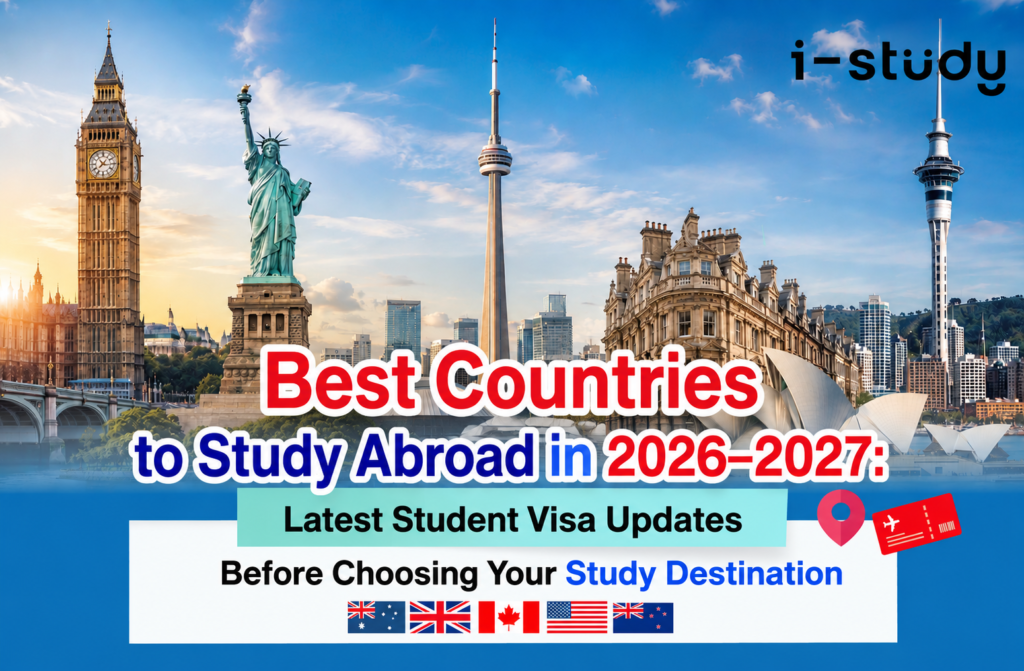
If we look back five or ten years, choosing a country to study abroad was relatively straightforward. Most students based their decision on university rankings, institutional reputation, or recommendations from seniors who had already studied overseas.
However, by 2026, the landscape of international education has changed significantly. Student visa regulations, living costs, and post-study work policies have all been updated in many countries. As a result, information that was accurate just two or three years ago may no longer be reliable for making decisions today.
Did you know that choosing the wrong study destination can mean much more than losing time or money? It can lead to unnecessary stress, difficulties adapting to a new environment, or even missing valuable opportunities to work after graduation.
To help students and parents avoid these challenges, the iStudy Education team has compiled the latest insights on the five most popular study destinations for 2026–2027. In this guide, you’ll discover not only the advantages of each country but also the important considerations that many education agencies may not tell you. Our goal is to help you choose the destination that best matches your academic goals, career plans, and personal circumstances.
Why Is Choosing a Study Destination More Challenging in 2026–2027?
Over the past few years, many countries have continuously revised their policies regarding international students. These changes include student visa requirements, financial evidence, part-time work regulations, post-graduation work rights, and even the number of international students each government plans to accept each year.
One of the most common issues the iStudy team has encountered while advising students and parents is that many still rely on information from YouTube videos or online reviews created before the COVID-19 pandemic or during 2022–2023. Unfortunately, much of that information no longer reflects the current situation.
For example, some people still believe that studying in Canada provides an easy pathway to permanent residency, as it did several years ago. Others assume that applying for an Australian student visa only requires proof of financial capacity. In reality, both countries have introduced significant policy changes over the past two years, making the application process more comprehensive than before.

Before Choosing a Country, Don’t Focus Only on the University’s Reputation
“Which country is the best?”
The truth is, there is no single “best” country for everyone. The most important question is whether a country fits your goals, budget, personality, and long-term career plans.
With more than ten years of experience advising students, we have found that one of the biggest reasons students struggle after moving abroad is not because of their English proficiency or academic ability—it is because they chose the wrong country.
Many students make their decision based on someone else’s dream rather than their own. Some follow their friends, some are influenced by social media influencers, and others simply follow current trends without asking themselves an important question:
“What kind of life do I want to have over the next three to five years?”
For example, students who enjoy living in large, vibrant cities, love social activities, and thrive in busy environments may find it difficult to adapt to a quieter city such as Christchurch, New Zealand, where the pace of life is much more relaxed.
On the other hand, students who value nature, dislike fast-paced lifestyles, and prioritize safety may feel overwhelmed living in major cities such as London, New York, or Sydney. Some iStudy students who chose to study in Sydney shared that although they enjoyed the city’s diversity and opportunities, its size and busy urban environment sometimes made them feel unsafe when walking alone.
For this reason, before selecting your study destination, the iStudy team encourages students to answer a few simple questions first:
- Do you plan to return to your home country after graduation?
- Would you like to work overseas after completing your studies?
- What is your family’s education budget?
- Do you prefer living in a large city or a smaller town?
- How important is part-time work while studying?
- What subject do you want to study, and does it align with the job market demand in that country?
Once you have clear answers to these questions, choosing the right country becomes much easier.
H2: 5 The Top 5 Study Abroad Destinations for 2026–2027

🇦🇺1. Australia – A Well-Balanced Choice with Excellent Part-Time Work Opportunities, Close to Home, but Proper Documentation Is Essential
If you ask the iStudy team which country has remained one of the most popular choices among Thai students over the past two years, Australia would undoubtedly be near the top of the list.
Australia offers an excellent balance between high-quality education, a comfortable lifestyle, strong employment opportunities during study, and a location that is relatively close to Thailand. For many students, the flight home takes only around 7–9 hours, giving parents greater peace of mind compared with studying in Europe or North America.
In addition, Australia is home to many internationally recognized universities, including members of the prestigious Group of Eight (Go8) as well as other institutions known for producing highly employable graduates.
Another major advantage is the opportunity to work part-time while studying. Based on the experiences of students who have studied through iStudy, many have successfully earned enough from part-time jobs to help cover their living expenses in cities such as Melbourne, Sydney, Brisbane, Perth, Canberra, and Adelaide.
However, there is one common misconception worth addressing: many students believe that part-time work can fully cover their tuition fees. In reality, part-time income is generally sufficient to help pay for daily living expenses, food, and accommodation, while tuition fees should still be planned for through family support or scholarships.
Latest Student Visa Updates for Australia (2026–2027)
One of the most significant changes in 2025–2026 has been the stricter assessment process for Australian student visas.
The Australian Government now places greater emphasis on the Genuine Student (GS) Requirement. Applicants must clearly demonstrate that their primary purpose for entering Australia is to pursue their education. As a result, preparing a well-written Statement of Purpose (SOP) or Study Plan has become more important than ever.
From the iStudy team’s experience, many applicants have excellent academic records and sufficient financial resources but struggle to explain why they chose a particular course or university. This often results in requests for additional documents or longer visa processing times.
Who Is Australia Best Suited For?
Australia is an excellent choice for students seeking a healthy balance between academic success, employment opportunities, and quality of life.It is particularly suitable for students interested in fields such as:
- Business
- Information Technology
- Data Analytics
- Nursing
- Early Childhood Education
- Engineering
These disciplines continue to be in strong demand across Australia’s labor market, offering graduates promising career prospects.
Who Might Find Australia Less Suitable?
If you are looking for a destination with a relatively low cost of living or have a limited budget, Australia may not be the most economical option.
Major cities such as Sydney and Melbourne have experienced significant increases in rental and living costs over the past few years. Therefore, choosing the right city is just as important as selecting the right university.
A more affordable city can help reduce your overall expenses while still providing access to high-quality education and excellent career opportunities.

🇬🇧2.United Kingdom (UK) – A Prestigious Destination with One-Year Master’s Degrees, Ideal for Those Who Value Time
When people think about studying in the UK in 2026–2027, the first things that often come to mind are world-renowned universities, academic prestige, and an elite educational experience. However, from the iStudy team’s perspective, the UK’s greatest advantage goes beyond its reputation—it is time.In today’s fast-changing world, time is just as valuable as money.
One of the main reasons business professionals, entrepreneurs, and working adults choose the UK is that most master’s degree programs can be completed in just one year. Compared to countries where a master’s degree typically takes two years, students can return to the workforce much sooner, saving both time and living expenses.
Based on iStudy’s experience over the past 12 months, there has been a noticeable increase in students aged 28–35 choosing the UK for postgraduate studies. Many of them are professionals looking to transition into fields such as:
- Data Analytics
- Digital Marketing
- Finance
- International Business
For these individuals, taking two years away from work means a significant loss of income. Completing a degree in just one year allows them to upgrade their qualifications while minimizing career interruptions and reducing overall study costs.
Latest UK Student Visa Updates (2026–2027)
The United Kingdom continues to welcome international students, although the government has introduced several policy adjustments affecting post-study opportunities.One policy that remains a major advantage is the Graduate Route Visa, which allows eligible international graduates from UK universities to stay and work after completing their studies.
However, students planning to study in the UK during 2026–2027 should closely monitor future policy developments. Changes to visa conditions, the permitted length of post-study stay, and regulations for dependents may continue to evolve.Staying informed about the latest immigration policies before submitting an application is therefore essential.
What Many People Don’t Realize About Studying in the UK
Many parents assume that studying in the UK is significantly more expensive than studying elsewhere. However, when considering the total investment, the UK may be more affordable than expected.Because most master’s programs last only one year, students spend less on accommodation, daily living expenses, and the opportunity cost of taking time away from work.
In addition, many UK universities offer scholarships and tuition discounts for international students. After these scholarships are applied, annual tuition fees can begin at approximately THB 600,000, depending on the institution and program.For students and families who evaluate education from a Return on Investment (ROI) perspective, the UK remains one of the most attractive study destinations for 2026–2027.
Who Is the UK Best Suited For?
- students who want to complete their degree quickly.
- Working professionals looking to enhance their qualifications or switch careers.
- Students seeking a degree from a world-class university.
- Individuals who can adapt quickly to an intensive academic environment, particularly in one-year master’s programs.
Who Might Find the UK Less Suitable?
If you prefer having more time to adjust to a new academic environment, the UK’s fast-paced education system may feel challenging—especially at the postgraduate level, where programs are completed within just one year.Many iStudy students have shared that each semester passes very quickly, and they needed to develop strong time-management and organizational skills from the very first day of class.For students who enjoy a slower learning pace or require additional time to settle into a new environment, it is important to carefully consider whether the UK’s intensive study model matches their learning style before making a decision.

🇨🇦3.Canada – An Outstanding Quality of Life, but Understanding the New Policies Is More Important Than Ever
When the iStudy team asks students what they value most when choosing a study destination today, one answer comes up more frequently than ever:
“A better quality of life.”
This is one of the main reasons why Canada continues to be one of the most popular study-abroad destinations for Thai students in 2026–2027.
Canada is internationally recognized for its safety, multicultural society, and exceptional quality of life. Cities such as Toronto, Vancouver, Calgary, and Ottawa remain among the top choices for international students from around the world.However, over the past two years, the Canadian government has introduced several policy changes affecting international students. As a result, students considering Canada should carefully research the latest regulations before making their decision.
A Common Misconception About Studying in Canada
One of the most common misunderstandings the iStudy team encounters is the belief that studying in Canada automatically provides an easy pathway to Permanent Residency (PR), as it did several years ago.In reality, Canada’s immigration system continues to evolve. The government regularly adjusts its immigration targets based on economic conditions and labor market demands.
This does not mean that Canada is no longer an attractive destination. Rather, students should choose Canada because of its high-quality education, excellent quality of life, and long-term career opportunities, instead of focusing solely on obtaining permanent residency.
Latest Canadian Student Visa Updates (2026–2027)
One of the most significant developments for students planning to study in Canada is the government’s recent adjustment to the number of international students admitted each year.
To address housing shortages and infrastructure challenges in certain provinces, Canada has introduced caps and stricter allocation policies for international student admissions in some regions.This does not necessarily reduce every student’s chance of receiving a visa. Instead, it means applicants should:
- Plan their applications well in advance.
- Carefully select an appropriate institution.
- Prepare complete and accurate documentation.
Another important consideration is the Post-Graduation Work Permit (PGWP).
The PGWP remains one of Canada’s greatest advantages because it allows eligible graduates to gain valuable Canadian work experience after completing their studies. However, eligibility depends on the type of institution and program selected. Therefore, students should verify the latest PGWP requirements with qualified education advisors before making their final decision.
Who Is Canada Best Suited For?
Canada is an excellent choice for students who:
- Value a high quality of life.
- Want to live in a safe and welcoming environment.
- Appreciate cultural diversity and inclusiveness.
- Seek a healthy balance between study, work, and personal life.
- Are comfortable living in a country with long, cold winters.
Who Might Find Canada Less Suitable?
If you dislike cold weather or find it difficult to adapt to long winters, Canada may require careful consideration.In many parts of the country, temperatures remain below freezing for several months each year. Students who are unprepared for the climate may find the adjustment challenging.
Before choosing Canada as your study destination, it is important to consider not only the academic opportunities but also whether the country’s climate and lifestyle are a good fit for your personal preferences and well-being.

🇺🇸4.United States (USA) – The Ideal Destination for Students with Clear Career Goals
Despite increasing competition from other popular study destinations over the past few years, the United States remains one of the world’s most influential and sought-after countries for international education.
Its greatest strength lies in being a global hub for innovation, technology, entrepreneurship, and research. Many of the world’s leading universities are located in the United States, maintaining close partnerships with industry leaders across sectors. From Silicon Valley and Wall Street to Hollywood and multinational technology companies, the U.S. offers an ecosystem that continues to attract talented students from around the globe.
Why Do Many Students Still Choose to Study in the United States?
Based on the iStudy team’s experience, students who choose to study in the U.S. often have well-defined career goals.
The country is particularly attractive for students pursuing fields such as:
- Artificial Intelligence (AI)
- Data Science
- Computer Science
- Engineering
- Biotechnology
- Finance
- Entrepreneurship
One of the United States’ greatest advantages is its world-class environment for innovation and startup development. Students have access to cutting-edge research, industry partnerships, and networking opportunities that can significantly enhance their future careers.
Latest U.S. Student Visa Updates (2026–2027)
Although the United States continues to welcome international students, the student visa application process remains highly focused on the visa interview and the applicant’s genuine intention to study.
Applicants should be prepared to clearly explain:
- Why they chose their academic program.
- Why they select that particular university.
- Their career plans after graduation.
- Why they decided to study in the United States instead of another country.
Some changes in visa policies have also affected applicants from certain countries, making it even more important to stay informed about the latest immigration regulations.
Many applicants mistakenly believe that having strong financial resources alone is enough to secure a student visa. In reality, thorough preparation for the visa interview remains one of the most important factors in a successful application.
Who Is the United States Best Suited For?
The United States is an excellent choice for students who:
- Have clear academic and career goals.
- Are interested in STEM, technology, or innovation-driven fields.
- Want to build an international professional network.
- View higher education as a long-term investment in their future.
Who Might Find the United States Less Suitable?
If you are still uncertain about your career direction or have a very limited budget, studying in the United States may require more careful planning.Compared with many other destinations on this list, the overall cost of studying and living in the U.S. remains relatively high. Therefore, students should carefully evaluate their financial resources, scholarship opportunities, and long-term career objectives before making a decision.

🇳🇿5. New Zealand – A Small Country with an Exceptional Quality of Life
When people think about studying abroad, New Zealand is often overshadowed by destinations such as Australia, the United Kingdom, or Canada.However, in recent years, the iStudy team has noticed growing interest in New Zealand among both students and parents—particularly families who prioritize safety, quality of life, a supportive learning environment, and long-term migration opportunities.
What Makes New Zealand Stand Out?
New Zealand’s greatest strength is its exceptional balance.
Although it has a relatively small population, the country offers a high-quality education system that is internationally recognized. It also places a strong emphasis on students’ well-being, practical learning experiences, and maintaining a healthy work–life balance.Based on feedback from students who have studied through iStudy, many describe life in New Zealand as less stressful than in larger countries. In fact, many graduates choose to remain in New Zealand after completing their studies because they appreciate its lifestyle and career opportunities.
Latest New Zealand Student Visa Updates (2026–2027)
New Zealand continues to welcome international students and remains committed to supporting international education.According to iStudy’s experience, the agency has maintained a 100% student visa success rate across all categories of New Zealand student visa applications.
Students who complete eligible qualifications may also apply for a Post-Study Work Visa, allowing them to remain in New Zealand and gain professional work experience after graduation.As visa policies and eligibility requirements can change, applicants should always verify the latest conditions for their chosen program and qualification level before applying.
Who Is New Zealand Best Suited For?
- Prioritize quality of life.
- Want to live in a safe and welcoming environment.
- Seek a healthy balance between academic life and personal well-being.
- Enjoy nature and a slower pace of living.
Who Might Find New Zealand Less Suitable?
If you enjoy the fast-paced lifestyle of major cities such as Sydney, New York, or Bangkok, love vibrant nightlife, or prefer a city that never seems to sleep, New Zealand may not be the ideal fit.Many of its cities offer a quieter, more relaxed lifestyle, combining urban convenience with peaceful residential neighborhoods. While this creates an excellent environment for studying and maintaining a healthy work–life balance, students seeking constant excitement and bustling city life may find the pace slower than expected.

Choosing the Right Study Destination: Maximizing Your Return on Investment (ROI)
One of the biggest trends the iStudy team has observed in 2026 is that both students and parents are increasingly viewing international education as an investment, rather than simply an expense.
To evaluate the true Return on Investment (ROI) of studying abroad, you should consider several important factors, including:
- Tuition fees
- Cost of living
- Length of the academic program
- Expected income after graduation
- Opportunities for post-study employment
- Demand for graduates in the local job market
For example, although tuition and living expenses in the United Kingdom may appear relatively high on an annual basis, most master’s degrees can be completed in just one year. In contrast, similar programs in other countries may require two years of study.
When calculating the total cost of education, including tuition, living expenses, and the opportunity cost of taking time away from work, the overall investment may be lower than many people expect.
For this reason, the iStudy team encourages students and families to evaluate the long-term value of their education instead of focusing solely on first-year tuition fees.
Comparison of the Top Five Study Destinations (2026–2027)
| Country | Key Advantages | Important Considerations | Post-Study Work Opportunities |
|---|---|---|---|
| Australia | Excellent part-time earnings, close to Thailand | Stricter student visa requirements | Yes |
| UK | One-year master’s programs | Higher living costs, especially in major cities | Yes (Graduate Route) |
| Canada | Outstanding quality of life | International student caps in some provinces | Yes (PGWP) |
| USA | Ideal for STEM and technology fields | Competitive visa interview process | Yes (OPT / STEM OPT) |
| New Zealand | Safe environment and exceptional quality of life | Quieter lifestyle and smaller cities | Yes (Post-Study Work Visa) |

Let i-Study Support Your Study Abroad Journey Every Step of the Way
Planning to study abroad in 2026–2027 involves much more than choosing a university.Students also need to consider:
- Student visa requirements
- Tuition fees and living expenses
- Career opportunities after graduation
- Long-term career goals
The iStudy team provides comprehensive guidance throughout every stage of the study abroad journey, including:
- Helping you choose the right study destination
- Recommending suitable universities and academic programs
- Assisting with university applications
- Preparing student visa documentation
- Reviewing your financial statements and Statement of Purpose (SOP)
- Advising on scholarship opportunities
- Preparing you before departure
- Providing ongoing support throughout your studies
👉สอบถามและขอคำปรึกษาฟรีได้ที่ www.i-study.co
📞โทร: 099-512-3639
📱LINE: @i-study1 (มี @ ด้วยนะคะ)
📲FB: istudy.bkk
📸IG: istudyth.
Conclusion
There is no single “best” country for studying abroad in 2026–2027.
Whether you choose Australia, the United Kingdom, Canada, the United States, or New Zealand, each destination offers its own unique advantages and challenges.
The most important factor is selecting the country that best matches your:
- Academic goals
- Career aspirations
- Budget
- Preferred field of study
- Long-term plans
As student visa regulations and international education policies continue to evolve—sometimes changing several times within a single year—having access to experienced advisors who stay up to date with these developments can significantly reduce the risk of visa refusal and improve your chances of a successful study abroad experience.More importantly, expert guidance provides peace of mind for both students and parents, knowing that professional support is available throughout the entire process.
If you are planning to study abroad in 2026 or 2027, the iStudy team is ready to provide a free consultation and help you identify the destination that best matches your profile, goals, and budget.
Frequently Asked Questions (FAQ)
Q: It’s already the middle of 2026. Is it still possible to apply for study abroad?
A:Absolutely. Many universities in Australia, the United Kingdom, the United States, Canada, and New Zealand are still accepting applications for the late-2026 intakes as well as early-2027 admissions. However, it is highly recommended that you begin preparing your application documents as soon as possible to maximize your options.
Q: Which countries are best for students who want to work part-time while studying?
A: Australia, New Zealand, and Canada remain three of the most popular destinations for students seeking part-time employment, thanks to their strong job markets and competitive hourly wages.
Q:Is the UK’s Graduate Route Visa still available for students in 2026–2027?
A:Yes. The Graduate Route Visa currently allows eligible international graduates to remain in the UK and work after completing their studies. As immigration policies may change, students should regularly check for the latest government updates.
Q: Can international students still work in Canada after graduation?
A: Yes. Graduates of eligible programs may apply for a Post-Graduation Work Permit (PGWP), allowing them to gain valuable Canadian work experience after completing their studies.
Q: Do I still need to attend a visa interview when applying to study in the United States?
A:In most cases, yes. Applicants for U.S. student visas are generally required to attend an interview with a consular officer and should be well prepared to explain their study plans, academic goals, and future career intentions clearly and confidently.
Q:Which country is considered the safest for international students?
A:New Zealand and Canada are widely recognized as two of the safest and most welcoming countries for international students, offering excellent quality of life and inclusive communities.
Q:If I have a limited budget, which country should I choose?
A:The best choice depends on your budget, preferred field of study, and long-term career goals. Rather than comparing tuition fees alone, it is important to evaluate the total cost of studying, including living expenses, program length, and future employment opportunities. Consulting with an experienced education advisor can help you make the most informed decision.
Q: How can iStudy help with my student visa application?
A: The iStudy team provides comprehensive visa support by reviewing application documents, assessing potential risks, advising on financial documentation and Statements of Purpose (SOPs), and ensuring that your application meets the latest visa requirements for your chosen destination. This personalized guidance helps maximize your chances of obtaining a successful visa outcome.
by i-study | www.i-study.co


แชทกับเรา!
เลือกวิธีติดต่อของคุณ
WhatsApp - ทีมงาน 👤 Human
คุยกับเจ้าหน้าที่จริง
WhatsApp - AI Bot 🤖 AI
ตอบอัตโนมัติ 24/7
LINE - ทีมงาน 👤 Human
คุยกับเจ้าหน้าที่จริง
LINE - AI Bot 🤖 AI
ตอบอัตโนมัติ 24/7
👤 เวลาทำการ: จ-ศ 9:00-17:00 น.
🤖 ตอบอัตโนมัติทันที ⚡